Do You Need Bilingual Hostesses in Singapore? A Practical Guide
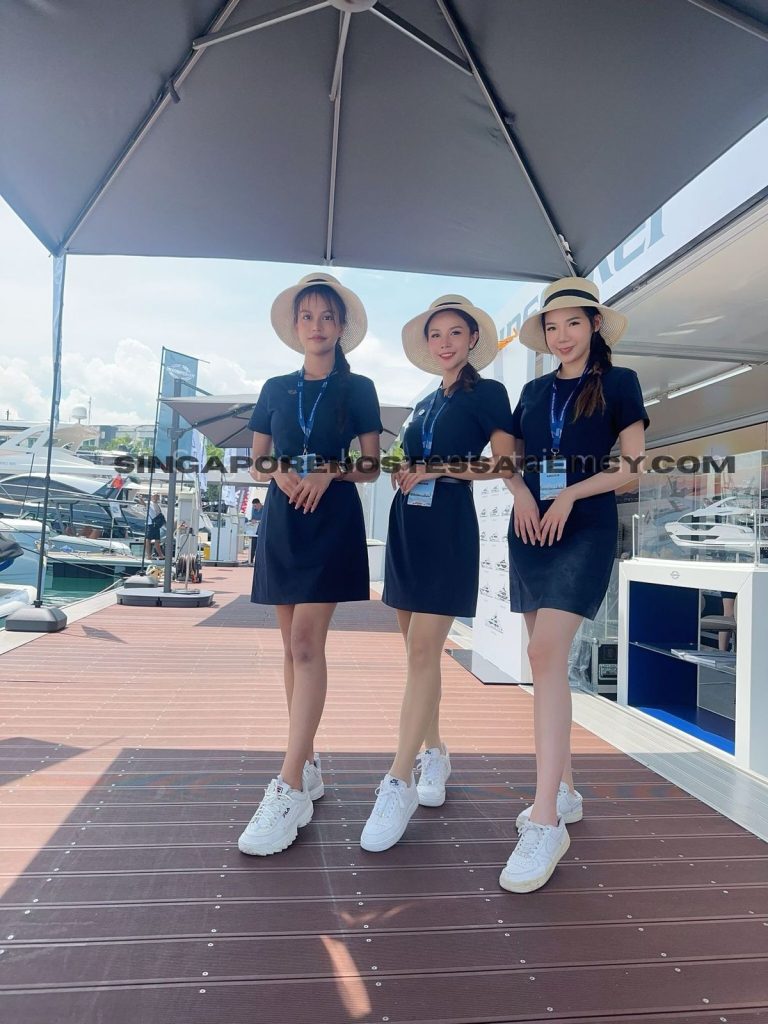
Singapore is one of the most multilingual business hubs in the world, and that shapes how your guests want to be received. A bilingual hostess is not a luxury add on for every event, but for the right occasion she turns a potential barrier into a warm welcome, and that often shows up directly in your results.
When bilingual staff genuinely pay off
- Incoming trade delegations. Regional and China delegations at shows like the Singapore Airshow or ITB Asia feel far better looked after by staff who can greet and guide them in their own language.
- VIP hospitality. For investor roadshows, diplomatic functions and luxury launches, speaking a guest’s language signals respect and smooths every interaction.
- High value exhibition leads. On a busy stand, a hostess who can switch to Mandarin can hold a real conversation with a buyer who would otherwise have moved on.
English and Mandarin, and beyond
English and Mandarin is by far the most requested pairing in Singapore, and it is available at short notice. Other pairings, including Malay, Tamil, Japanese, Korean and Bahasa Indonesia, are available with a little more lead time. If you know a delegation is coming, tell us the languages early and we will confirm availability.
When it might be overkill
For a local corporate dinner or a domestic retail activation, standard English speaking hostesses are usually all you need, and paying for bilingual staff you will not use is not something we would push. The honest test is simple: will a meaningful share of your guests be more comfortable in a second language? If yes, book bilingual. If not, save the budget.
How much notice you need
For English and Mandarin, a day or two is often enough. For rarer languages, give us a week where possible, and book earlier around major delegation weeks. You can start on our bilingual hostess page, and if your event is an exhibition, pair this with our guide to staffing a booth.